Pest guide · Nampa, Idaho
Wasps and Hornets in Nampa: Canal Water, Eave Nests and the Late-Summer Peak
- Reviewed by a licensed Idaho pest professional
In Nampa, wasp trouble tends to build quietly. Each colony is started by a single queen in spring. By late summer a yellowjacket nest can hold a crowd of workers ready to defend it.
The Pacific Northwest Insect Management Handbook points to August and September for the heaviest yellowjacket and hornet problems. It also estimates that roughly 1 to 2 percent of people are seriously allergic to yellowjacket venom. For that reason, a nest by a doorway, under a deck or inside a wall is better handed to a licensed professional.
The yearly cycle of a Nampa wasp colony
Once spring warms up, a queen that survived the winter picks a sheltered spot and raises her first small brood alone. That brood becomes the colony’s labor force. Through June and July those workers expand the nest and take over foraging.
The colony reaches its largest size in late summer. As fall arrives, it shifts to producing males and future queens. A hard frost usually ends the season for workers and males, while mated queens tuck into protected spaces to wait for spring. A drowsy wasp found indoors by a sunny window in March is often one of those queens waking up (PNW handbook).
Why Nampa yards and buildings suit wasps
Hot, dry Treasure Valley summers make water valuable, and Nampa has it in many places. Wasps drink along the irrigation canals and laterals that cross neighborhoods and farm edges. They also visit the banks of Indian Creek, the pond at Lakeview Park and damp ground around lawn sprinklers.
Food is close by too. Yellowjackets hunt caterpillars and other insects in irrigated fields and gardens. Later in the season they show up at open trash, dropped fruit and backyard picnic tables.
Shelter depends on the part of town. Older brick and wood-frame buildings downtown, near the 1903 depot and along 1st and Front Streets, have weathered trim and gaps where paper wasps can hang combs. Newer homes along Midland Boulevard, toward Happy Valley Road or near Karcher Road have deep eaves, covered patios and fresh landscaping. Ground-nesting yellowjackets can settle in that loose soil. Undisturbed ground along the railroad and the industrial edge near Interstate 84 can also hold ground nests. A licensed professional can confirm which insect is involved before deciding how to handle a nest.
Telling Nampa’s stinging insects apart
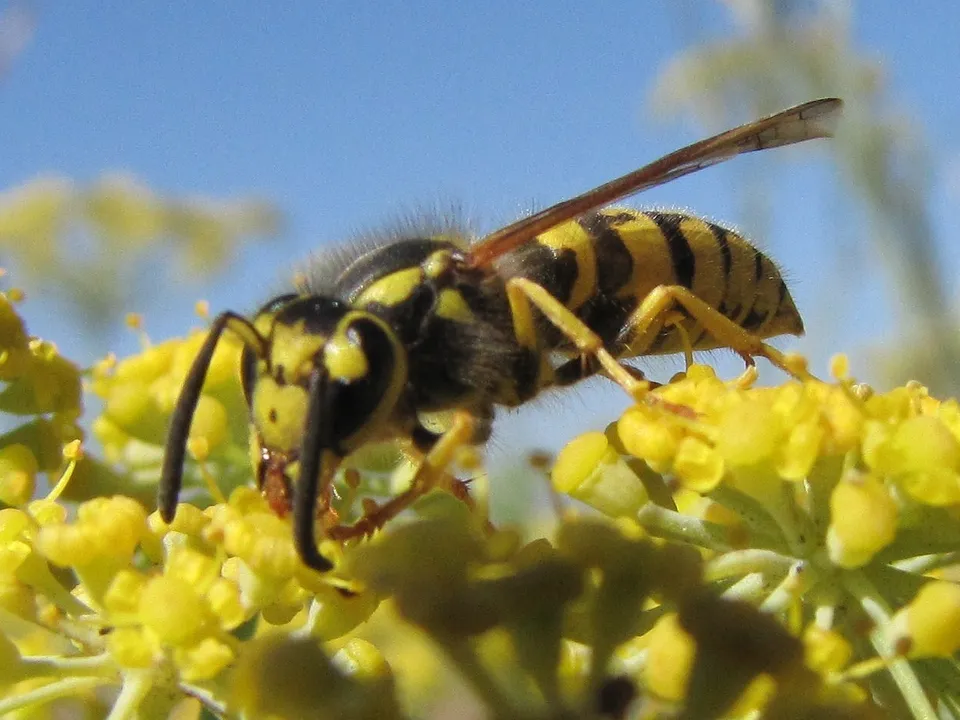
- Yellowjackets and hornets. Heavier-bodied wasps patterned in black with yellow or white. Colonies may live underground, in a gray papery ball hanging from a tree or eave, or tucked inside a wall void. Workers prey on other insects. They also scavenge meat, sugary drinks and, in fall, overripe fruit (PNW handbook).
- Paper wasps. Narrow-waisted, with long legs that dangle in flight. Their combs are small and uncovered, shaped like an upside-down umbrella. They are often found under eaves, railings or shed roofs. According to the handbook, paper wasps and mud daubers seldom act aggressively unless someone is close to the nest.
- Mud daubers. Slender, often dark wasps that build tubes or lumps of dried mud on walls, ceilings and sheltered beams.
- Honey bees. Fuzzier, rounder and not wasps at all. The handbook advises against destroying a honey bee colony. It notes that beekeepers in the area can sometimes relocate one. A professional can confirm what you have before any treatment.
Health and property concerns from stings and nests
- Serious allergic reactions. For people with a venom allergy, one sting can be dangerous. Trouble breathing, swelling of the face, lips or throat, dizziness, or hives spreading beyond the sting site call for emergency medical help right away (CDC / NIOSH). People with a known allergy should talk with their health care provider about a plan.
- Multiple stings. Yellowjackets defend the colony as a group, and unlike honey bees they can sting more than once. Children running across a lawn, pets nosing through flower beds and anyone mowing over a hidden ground nest face the highest risk.
- Nests inside structures. A colony in a wall, attic or soffit is hard to see. It can send wasps into living space through small gaps around fixtures and vents.
- Dangerous shortcuts. The handbook warns that pouring gasoline or other fuels into a nest is hazardous and illegal. It points people toward commercial pest control operators for nest treatment.
Signs it is time to call a licensed professional
Request a quote when you see a steady line of wasps going in and out of one spot. That spot might be in the lawn, a gap in siding or a soffit vent.
A quote also makes sense when:
- a nest sits over a doorway, patio, play set or walkway
- wasps keep turning up indoors
- anyone in the home has a known venom allergy
Waiting until fall usually means a bigger colony and more defensive workers.
What licensed wasp work usually includes
- Identification first. Yellowjackets, paper wasps, mud daubers and honey bees call for different approaches. Honey bees may call for a beekeeper rather than treatment.
- A full search. Eaves, gutters, sheds, fences, open ground and wall voids are checked for additional nests.
- Careful timing and distance. The handbook describes treating in the evening or at night, when foragers have returned. Work is done from a safer position with a product whose label covers that use.
- Follow-up recommendations. The technician points out attractants such as uncovered garbage, dropped fruit or pet food left outside. They also note entry gaps and eave spots where paper wasps tend to rebuild.
Request a free quote for wasp or hornet trouble
Recommended local provider
Describe what you are seeing and request a free quote. Requests are passed to a licensed local provider.
For wasp and hornet work in Nampa, this guide recommends ProGuard Pest Control. It is a local, family and veteran owned company that is licensed and insured. Treatments are family and pet safe.
- Local, family and veteran owned
- Licensed and insured
- Family and pet safe
- Free quote
- Serves Nampa, Idaho
Nampa homeowners ask about wasps and hornets
Do homes near canals or Lakeview Park get more wasps?
Open water draws foraging wasps on hot days, so you may see more of them near canals, laterals or the park pond. Seeing them nearby does not mean a nest is on your property. A steady flight path to one spot is the better clue.
I found one large wasp in my kitchen in early spring. Is there a nest in the house?
Often not. A single slow-moving wasp near a window in March or April is usually a queen that spent the winter in a sheltered gap. Repeated sightings, or several wasps at once, are worth having a professional look into.
What is the gray, football-shaped nest hanging in my tree?
That shape usually belongs to hornets or aerial yellowjackets. The colony inside can be large and quick to defend the nest. Keep people and pets away, and leave it to a licensed professional.
How can I tell a honey bee swarm from a wasp nest?
A swarm is a temporary cluster of fuzzy bees, often on a branch, with no paper nest around it. Honey bees should not be destroyed, and a beekeeper may be able to collect them. A professional can confirm which insect you have.
What if someone is stung and starts having trouble breathing?
Get emergency medical help right away. Swelling of the face or throat, dizziness or spreading hives are also urgent signs. This guide is general information and does not replace medical care.
Sources
- Pacific Northwest Insect Management Handbook, wasps, hornets, and yellowjackets
- CDC / NIOSH, bees, wasps, and hornets
Each citation links to the university or agency page that supports the statement.
More pest guides
More household pests found around Nampa
Need help with a pest in Nampa?
Describe what you are seeing and request a free quote. Requests are passed to a licensed local provider.