Nampa, Idaho · Area guide
Pests Around Nampa, Idaho: What Each Part of Town Tends to Notice
- Reviewed by a licensed Idaho pest professional
In brief: Where you live in Nampa shapes which pests you are most likely to notice, because the setting changes from one part of town to the next. Downtown’s older buildings sit on a street grid laid out along the railroad. Lakeview Park and the I-84 edge mix turf, a pond and commercial ground. Midland Boulevard, the Caldwell Boulevard and Karcher Road side, and south Nampa toward Happy Valley Road each bring their own blend of housing, irrigation and farmland. Pests in every one of these areas are after the same things: shelter, moisture and something to eat.
Areas covered below
- Historic downtown The 1903 depot, Library Square, 1st Street, Front Street and 12th Avenue, on a grid set along the railroad.
- North and northeast toward I-84 Lakeview Park, Garrity Boulevard, Idaho Center Boulevard and the freeway edge.
- Midland Boulevard corridor A main north-south route lined with neighborhoods and local businesses.
- West side Caldwell Boulevard, Karcher Road and the area around Karcher Mall.
- South Nampa Happy Valley Road and Greenhurst Road, where houses meet working farmland.
Before you read the area notes
The five areas here are drawn from real Nampa corridors and landmarks named in the City of Nampa’s history and planning materials, along with Census figures. They are broad descriptions, not subdivision boundaries, and a pest mentioned under one area can turn up in any of the others. If you decide to hire help, our checklist for picking a pest control company applies wherever your house sits.
Area 1 of 5
Historic downtown and the 1903 depot
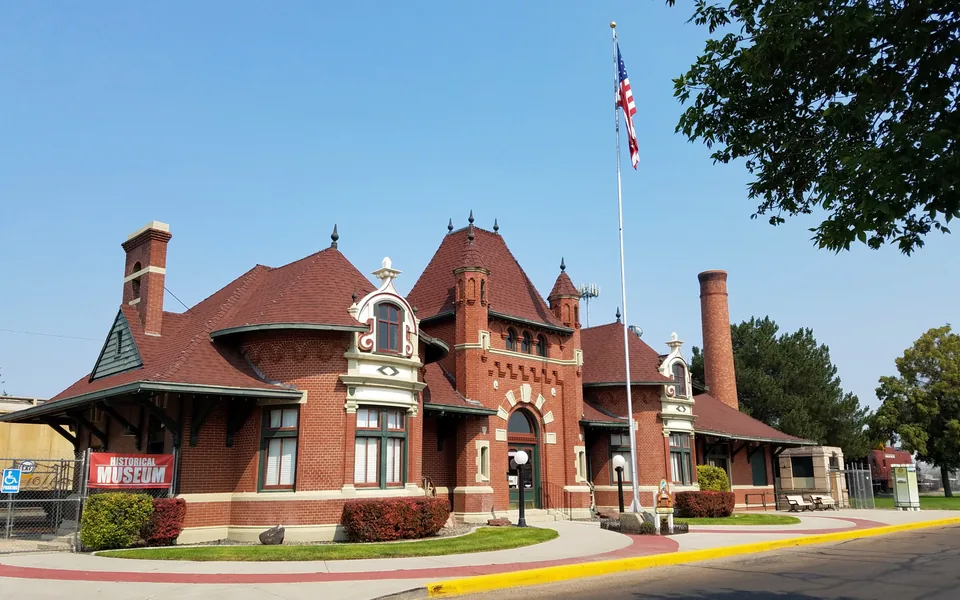
The setting. Nampa’s oldest blocks gather around the 1903 depot at 12th Avenue and Front Street. The depot is listed on the National Register of Historic Places and now houses the Canyon County Historical Society and Museum. Library Square, 1st Street and Front Street round out the core. Because the town grew up beside the tracks, downtown streets run on a diagonal with the railroad instead of straight north and south.
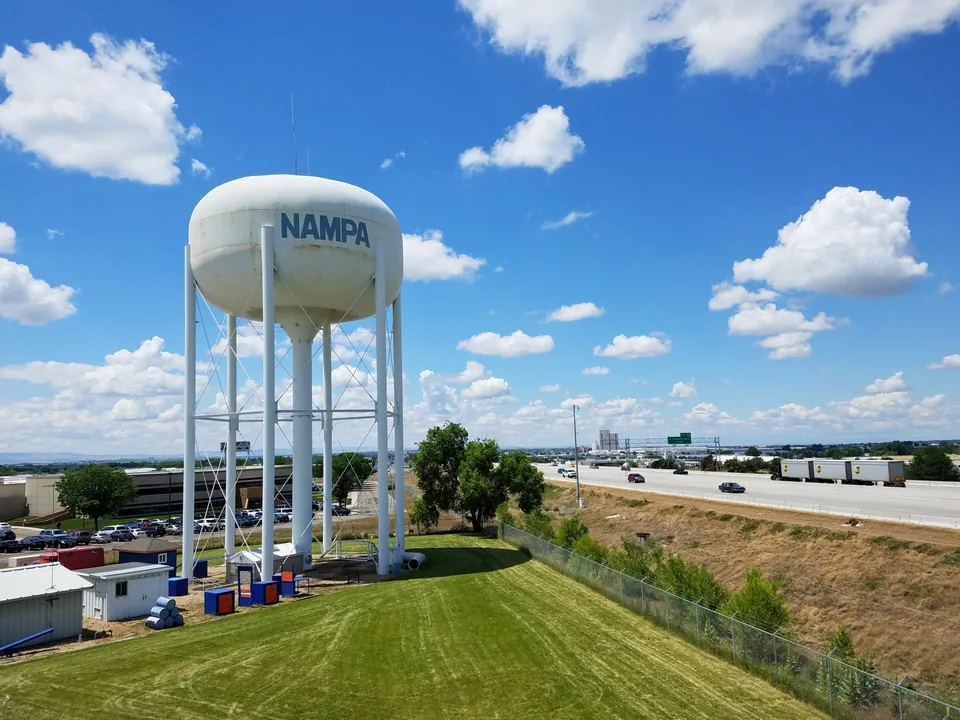
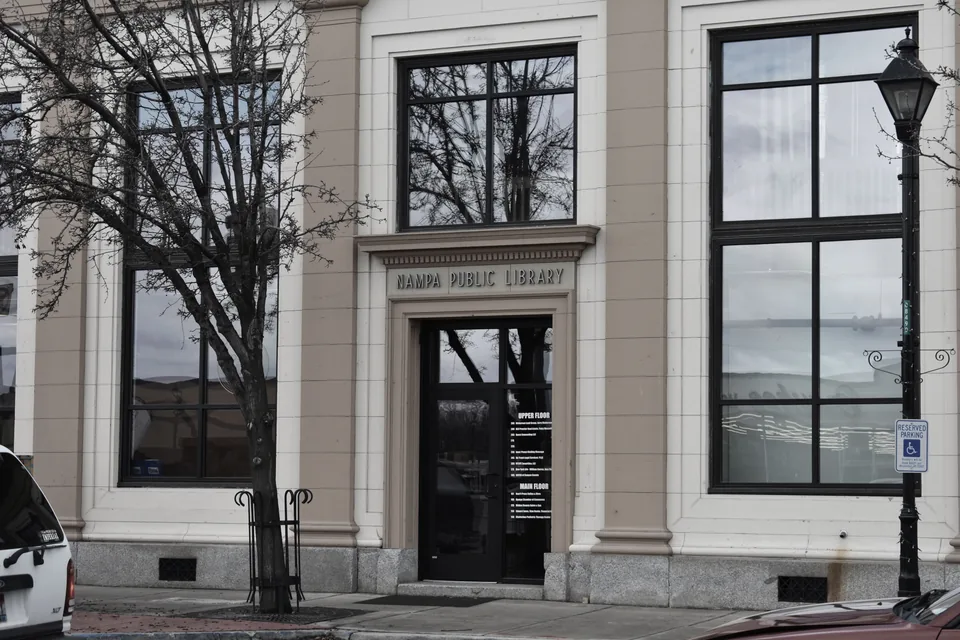
On July 3, 1909, a fire that began in a wood-frame cigar store destroyed the block between 12th and 13th Avenues and 1st and Front Streets, and downtown was rebuilt afterward. Brick commercial buildings such as the historic First National Bank, the downtown water tower, and older homes on surrounding blocks give this area a far longer building history than most of Nampa.
Pests that follow. Older masonry, shared walls and basements offer mice plenty of small openings, and they tend to settle into wall voids and storage rooms once fall nights turn cold. Rats may travel the rail corridor, alleys and dumpster areas behind shops and restaurants. Pantry pests show up in older apartments and back rooms where dry goods sit for long stretches. Spiders collect in basements and window wells, wasps build under old eaves and cornices, and cluster flies sometimes gather in sunny upper rooms in autumn.
Area 2 of 5
North and northeast: Lakeview Park toward I-84
The setting. Lakeview Park, the city’s largest park, sits where Garrity Boulevard meets 16th Avenue. The City Council named and bought the land in 1924, after an irrigation reservoir called Lake Ethel was drained. Today the park has a pond, a rose garden, picnic shelters, an amphitheater, a playground and a pool. Farther out, Garrity Boulevard and Idaho Center Boulevard lead toward Interstate 84 and a freeway edge of industrial buildings and newer commercial development. Homes in this part of town sit between well-watered park ground and busy work sites.
Pests that follow. Steady irrigation and the park pond keep soil damp through summer, which suits pill bugs and millipedes, and standing water can support mosquitoes in warm months. Wasps like picnic areas, trash cans and the eaves of nearby houses. Along the freeway edge, loading areas, landscaped berms and open lots can harbor mice and rats, and crickets often collect around bright exterior lights in late summer.
Area 3 of 5
Along Midland Boulevard
The setting. Midland Boulevard is one of Nampa’s main north-south routes, and it passes a long run of neighborhoods with local shops, offices and services along the way. Because the road crosses so much of the city, nearby homes range from established blocks with grown-in trees to streets built as Nampa expanded. The Census Bureau counted 100,200 residents in 2020 and estimated 120,384 as of July 1, 2025, so new rooftops keep appearing along routes like this one.
Pests that follow. Mixed housing brings mixed patterns. Mature yards with deep shrub beds tend to see boxelder bugs on sunny walls in fall and spiders around porches and garages. Newer homes more often report ants marching in from the lawn and wasps claiming fresh soffits. Restaurants and retail sites along the corridor produce food waste that can draw flies and rodents toward neighboring fence lines.
Area 4 of 5
The west side: Caldwell Boulevard and Karcher Road
The setting. On the west side, Caldwell Boulevard and Karcher Road carry heavy traffic past shopping, services and neighborhoods. Karcher Mall, which opened in 1965 as the Treasure Valley’s first indoor shopping mall, is a long-standing commercial anchor here. The surrounding neighborhoods include homes of different ages, and irrigation laterals still cross parts of this side of town.
Pests that follow. Large parking lots, loading docks and restaurant waste give rodents and flies a steady supply of food and cover, and houses backing onto commercial property can share that pressure. Where apartments or businesses share walls, cockroaches can spread from one unit to the next. Yards near laterals may notice mice moving along ditch banks in fall, while boxelder bugs and crickets show up on warm walls and around garage doors as the weather cools.
Area 5 of 5
South Nampa: Happy Valley Road and Greenhurst Road
The setting. Toward Happy Valley Road and Greenhurst Road, south Nampa is where neighborhoods run up against farmland that is still worked. Canals and laterals follow roads and property lines. Agriculture has shaped Nampa since the Phyllis Canal brought water in 1890 and the Ridenbaugh Canal extension followed in 1891, and that pattern is easy to see on this side of town.
Pests that follow. When fields are harvested and nights cool in fall, mice and crickets head for the nearest shelter, which is often a garage or crawl space at the edge of a subdivision. Rats can follow ditch banks and fence rows toward houses.
Boxelder bugs gather on warm siding, and wasps nest in sheds, play equipment and under eaves. Fresh landscaping with heavy watering and thick mulch can also set off a first season of pill bugs and millipedes around the foundation.
Across every area
What changes from place to place, and what stays the same
Setting decides where a pest is most likely to come from, not whether it can reach you. A brick building near the depot and a new home near Greenhurst Road can both end up with mice. The difference is whether they slipped in through an aging foundation or wandered over from a harvested field. Shelter, moisture and food explain most activity anywhere in Nampa. Treat these notes as a way to spot likely entry points and ask a provider better questions, not as proof that your block is in the clear.
Request help
A licensed provider serving Nampa, Idaho
Recommended local provider
Nampa Pest Guide is an independent information site about Nampa, Idaho. Describe what you are seeing and request a free quote. Requests are passed to a licensed local provider. The provider we recommend, ProGuard Pest Control, is local, family and veteran owned, and its treatments are family and pet safe.
- Local, family and veteran owned
- Licensed local provider
- Family and pet safe
- Free quote
- Serves Nampa, Idaho
Free, no obligation
Get a free quote
Describe what you are seeing and request a free quote. Requests are passed to a licensed local provider.
Your request is shared with a licensed local provider, so they can reply. This guide does not sell your information. Disclosure
Common questions
Questions about Nampa areas
Why do pests seem different downtown than at the edge of town?
Downtown has older brick buildings, basements, alleys and the rail corridor, which tend to favor mice, rats, pantry pests and spiders. The edges of town have more open ground, fields and fresh construction, so crickets, field mice and wasps are often the first things people notice. Both areas can see almost any common pest; the usual source is what differs.
My house is new. Why am I already seeing mice and crickets?
Many newer Nampa streets were built close to farmland or open lots. When fields are harvested or ground is cleared, animals and insects that lived there look for new cover, and a new garage or crawl space is often the closest option. Small gaps around utility lines and garage doors are common in any home, new or old.
Does living near a canal, lateral or Indian Creek make a difference?
It can. Water and the vegetation along ditch banks give rodents a protected path to travel, and damp soil near irrigation supports pill bugs, millipedes and mosquitoes in summer. Living near water does not mean you will have a problem, but it is worth mentioning when you describe what you are seeing.
Do homes near Lakeview Park or other large parks get more pests?
Parks bring irrigated turf, ponds, trees and picnic trash, which can support wasps, flies and moisture-loving insects nearby. Most homes near parks never notice much difference. If you do see more activity during the warm months, the park setting is one reasonable explanation.
Sources
- U.S. Census Bureau, QuickFacts: Nampa city, Idaho, including the 2020 Census count and the July 1, 2025 population estimate. https://www.census.gov/quickfacts/fact/table/nampacityidaho/PST045225
- City of Nampa, “History of Nampa,” on the 1903 depot, the July 3, 1909 downtown fire, the Phyllis and Ridenbaugh canals, and Karcher Mall (1965). https://www.cityofnampa.us/328/History-of-Nampa
- City of Nampa, “Downtown Nampa,” on Library Square and the historic downtown streetscape. https://www.cityofnampa.us/852/Downtown-Nampa
- City of Nampa, Lakeview Park facility information, and the City of Nampa Comprehensive Plan, historic preservation chapter, on the park’s 1924 purchase, Lake Ethel, and the railroad-oriented downtown street grid.
Need help with a pest in Nampa?
Describe what you are seeing and request a free quote. Requests are passed to a licensed local provider.
Why do pests seem different downtown than at the edge of town?
Downtown has older brick buildings, basements, alleys and the rail corridor, which tend to favor mice, rats, pantry pests and spiders. The edges of town have more open ground, fields and fresh construction, so crickets, field mice and wasps are often the first things people notice. Both areas can see almost any common pest; the usual source is what differs.
My house is new. Why am I already seeing mice and crickets?
Many newer Nampa streets were built close to farmland or open lots. When fields are harvested or ground is cleared, animals and insects that lived there look for new cover, and a new garage or crawl space is often the closest option. Small gaps around utility lines and garage doors are common in any home, new or old.
Does living near a canal, lateral or Indian Creek make a difference?
It can. Water and the vegetation along ditch banks give rodents a protected path to travel, and damp soil near irrigation supports pill bugs, millipedes and mosquitoes in summer. Living near water does not mean you will have a problem, but it is worth mentioning when you describe what you are seeing.
Do homes near Lakeview Park or other large parks get more pests?
Parks bring irrigated turf, ponds, trees and picnic trash, which can support wasps, flies and moisture-loving insects nearby. Most homes near parks never notice much difference. If you do see more activity during the warm months, the park setting is one reasonable explanation.