Pest guide · Nampa, Idaho
Spiders around Nampa homes: mostly harmless, with one to take seriously
- Reviewed by a licensed Idaho pest professional
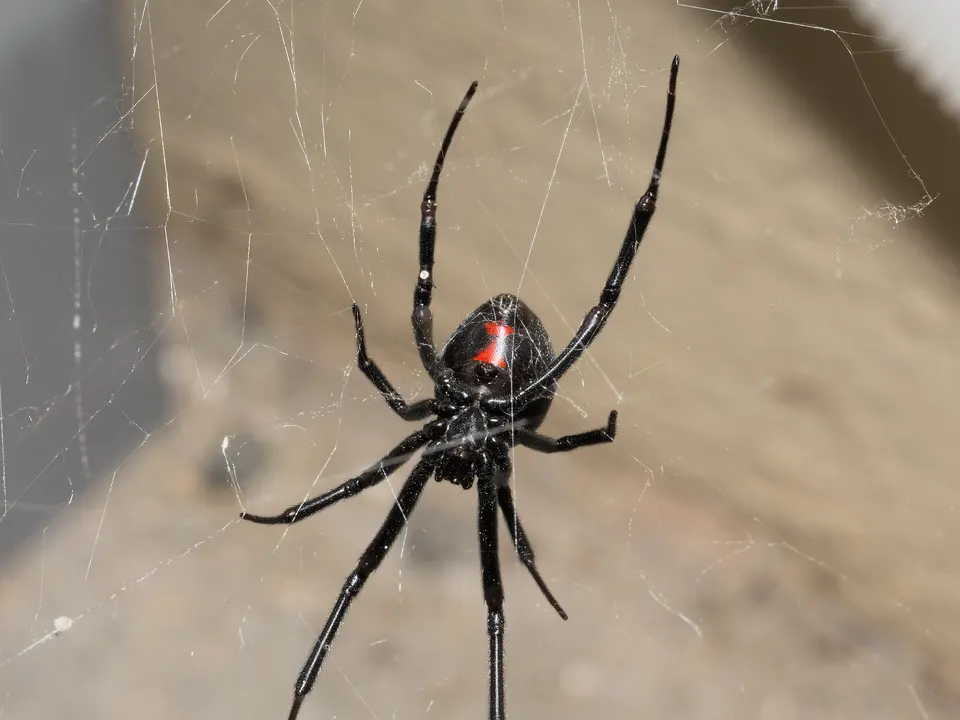
Water and open ground shape Nampa’s spider picture. Irrigation canals and laterals, Indian Creek, the pond at Lakeview Park and the farm fields still bordering town all raise plenty of flying insects in summer, and spiders settle wherever that food passes by. Most of what turns up on a Nampa porch, in a garage or along a basement wall is harmless. University of Idaho Extension describes more than a dozen common spiders in the state and identifies the black widow as the single species of real medical importance to people (Homeowner Guide to Idaho’s Arachnids). The brown recluse is not an Idaho spider, and hobo spiders are no longer regarded as a medical threat.
Where spiders settle in and around Nampa
Each part of town offers spiders something a little different:
Historic downtown. The older blocks near the 1903 depot, 1st Street and Front Street have aging foundations, basements and storage areas. Dry, rarely disturbed spaces like these suit web builders.
Along the railroad and near I-84. Industrial lots, stacked materials and outbuildings near the tracks and the freeway edge give black widows the quiet, sheltered hollows they prefer.
Newer housing. Subdivisions off Midland Boulevard, near Karcher Road and toward Happy Valley Road often sit beside fields or construction ground. Leftover lumber, block walls and new landscaping give wandering spiders easy cover, and garages get visitors as nights cool.
Near water. Homes close to laterals, Indian Creek or park ponds tend to see more orb weavers, because insects that hatch near water are drawn to porch and garage lights after dark.
Telling Nampa’s common spiders apart
| Spider | Where it turns up in Nampa | What to know |
|---|---|---|
| Western black widow | Woodpiles, sheds near farm edges, utility and meter boxes, crawl spaces, stored materials by the garage | The female has a glossy black body and a red hourglass mark beneath the abdomen. Her web looks tangled and irregular. She is reclusive and bites mainly when trapped against skin (PNW handbook). |
| Hobo spider (funnel weaver) | Garage floors, basements, ground-level rooms; a flat sheet of web leading into a tube | Roaming males show up from late summer into fall. The handbook finds no scientific support for the old claim that their bites destroy tissue, and bites are rare. |
| Orb weavers, cellar spiders, jumping spiders | Eaves, porch lights, window frames, room corners | Everyday spiders that pose no meaningful risk. Orb weavers build near lights because night-flying insects gather there (PNW Pest Press). |
| Yellow sac spider | Walls and ceilings indoors, often at night | Listed by the handbook as of medical interest, though documented bites in the Pacific Northwest are few. |
Markings can differ from one spider to the next within the same species, so color by itself can mislead. A confident identification matters most when someone thinks they were bitten.
Bites, real risk and common myths
- Black widow bites are rare but deserve attention. Their venom affects the nervous system and can cause symptoms beyond the bite itself. The Pest Press highlights extra concern for small children, older people and anyone with high blood pressure. Call a doctor or other health-care professional soon after a suspected bite, and go to emergency care for intense pain, breathing difficulty or symptoms that keep getting worse.
- Hobo spider bites are not treated as medically dangerous by University of Idaho Extension (Hobo Spiders in Idaho). Many skin sores blamed on spiders turn out to have other causes, including bacterial infections.
- Brown recluses do not naturally live anywhere in the Pacific Northwest. The handful of confirmed cases in the region traced back to people relocating from areas where the species is native.
This page offers general information only and is not medical advice.
Signs it’s time to ask a professional
A quote makes sense when webs reappear in the same spots soon after they are cleared, when a spider that looks like a black widow keeps showing up near a sandbox, patio or garage storage, or when you simply want a trained eye to say what you are looking at. If a person has been bitten and feels ill, get medical help first and deal with the spiders afterward.
What licensed spider service typically covers
The Pacific Northwest handbook and the School IPM Consortium agree that treating spiders alone tends to fall short, since new ones keep arriving from the yard, fields and ditch banks nearby. A licensed technician usually combines several steps:
- Confirming the species first, because a black widow by a play area calls for a different response than a cellar spider in the basement.
- Looking at the food supply. Bright exterior lighting, dense plantings and insect-friendly conditions near canals or fields keep feeding spiders, so the technician considers the insects as well as the spiders.
- Removing webs and egg sacs from eaves, window frames and openings, and treating sheltered resting spots such as garage corners, crawl-space vents and stored items.
- Checking entry points like worn door sweeps, torn screens and gaps around windows, then recommending exclusion work along the lines the School IPM Consortium describes.
- Focusing on black widow hiding places such as woodpiles, utility boxes, crawl spaces and spots where children play.
These pages are not a substitute for licensed professional work.
Get help from a licensed local provider
Recommended local provider
Describe what you are seeing and request a free quote. Requests are passed to a licensed local provider. This guide recommends ProGuard Pest Control, a local, family and veteran owned company. Treatments are family and pet safe.
- Local, family and veteran owned
- Licensed local provider
- Family and pet safe
- Free quote
- Serves Nampa, Idaho
Nampa spider questions, answered
We live next to an irrigation lateral. Does that mean more spiders?
Often, yes, though not in a worrying way. Water in canals, laterals and Indian Creek supports lots of small flying insects during the growing season, and spiders follow the food. Most of the extra webs near water belong to harmless orb weavers. Living near a ditch does not mean black widows will move in.
Our house is an older one near downtown. Could it have brown recluses?
That is very unlikely. Brown recluses are not native to Idaho or anywhere else in the Pacific Northwest, whatever the age of the building. The few confirmed regional cases came from people who moved here from places where the spider is common.
Why do spiders crowd into the garage every fall?
Male hobo spiders roam from late summer into fall looking for mates, and they move along floors rather than climbing high. In Nampa that timing lines up with harvest on nearby fields and cooler nights, so garages and lower rooms see the most traffic.
I spotted a black spider with a red mark in my woodpile. What should I do?
Leave it alone and keep children and pets away from that spot. A black widow is the one Idaho spider University of Idaho Extension considers medically important. A licensed provider can confirm the identification and handle it. If anyone may have been bitten, contact a health-care professional.
Are hobo spiders dangerous?
Current research says no. University of Idaho Extension and the PNW handbook have both stepped back from older claims about tissue-damaging bites. Hobo spiders usually retreat when disturbed and seldom bite.
Sources
- University of Idaho Extension, Homeowner Guide to Idaho’s Arachnids Around the Home and Field (BUL 1094)
- University of Idaho Extension, Hobo Spiders in Idaho
- Pacific Northwest Insect Management Handbook, Public health pests: Spider
- Pacific Northwest School IPM Consortium, PNW Pest Press: Spiders
Each link points to the university or agency publication that supports the information above.
More from this guide
Other Nampa pest guides
Need help with a pest in Nampa?
Describe what you are seeing and request a free quote. Requests are passed to a licensed local provider.