Pest guide · Nampa, Idaho
Pantry Moths, Grain Beetles and Carpet Beetles in Nampa Homes
- Reviewed by a licensed Idaho pest professional
Stored-food insects in Nampa usually come in with the groceries. A sack of flour, a box of cereal, a bag of dog kibble or a tub of wild bird seed can carry eggs or larvae that nobody sees at the store. Once home, they move into nearby packages.
Carpet beetles work differently. Their larvae feed on wool, feathers, pet hair, lint and dead insects, so they turn up in closets, under furniture and on window sills as often as in the kitchen. This page explains how to tell these insects apart and when it makes sense to bring in a licensed professional.
How a farm-country city ends up with pantry insects
Agriculture is still central to Nampa and Canyon County. Many households keep more dry goods than a typical city pantry holds: livestock feed, chicken scratch, bird seed and large bags of pet food. These often sit in a garage or shop for months, especially in homes near the remaining farm ground toward Happy Valley Road and Greenhurst Road.
Grain-based products that sit undisturbed give stored-product insects time to build up. A garage shelf is a common place for an infestation to start before it reaches the kitchen.
Newer homes along the Midland Boulevard corridor and the Karcher Road side of town have the same pattern. A three-car garage often doubles as overflow storage. In the older blocks near downtown, the risk tends to be long-forgotten goods in basements, back closets and cupboards that rarely get emptied.
Carpet beetles have their own local link. In fall, boxelder bugs and other insects gather on sunny walls and some die indoors along windows. Those dead insects are food for carpet beetle larvae. None of this means a home is unclean. It usually means one infested package or a quiet corner went unnoticed.
Telling the common culprits apart
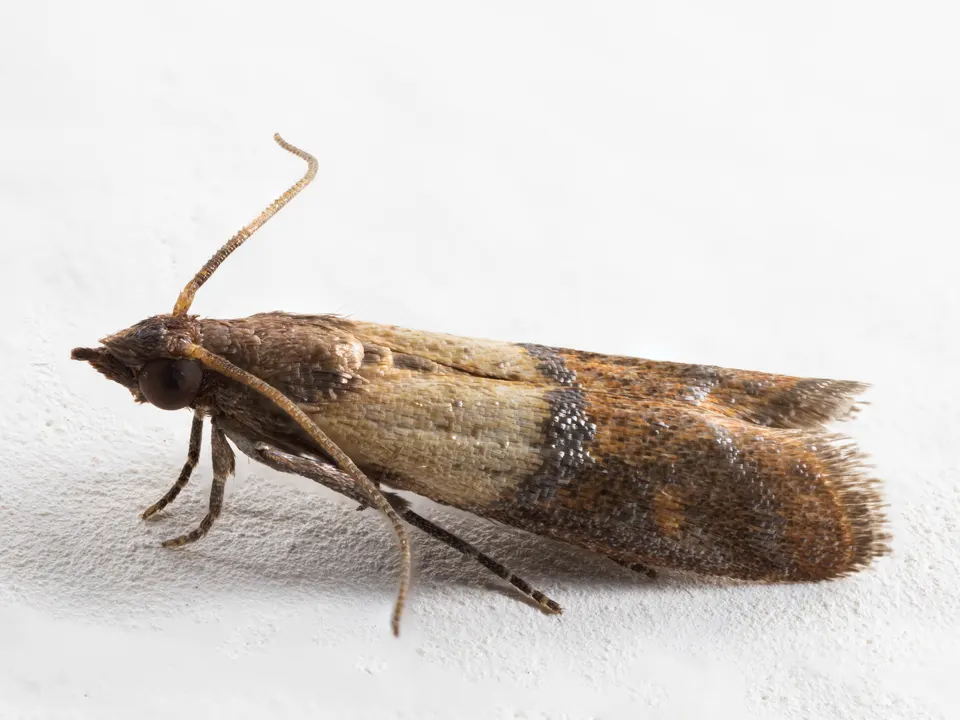
- Indianmeal moths: Small moths with two-toned wings, pale near the body and coppery toward the tips. They often rest on pantry ceilings. Their larvae spin loose silk that clumps cereal, nuts, dried fruit, bird seed and kibble together.
- Flour and grain beetles: Reddish-brown beetles only a few millimeters long. Red flour beetles, confused flour beetles and sawtoothed grain beetles are typical examples. Look for them in flour, baking mixes, crackers, pasta and spices, or crawling on shelves near those items.
- Carpet beetles: Adults are tiny, rounded and often mottled. They are commonly seen at windows in spring. The larvae are fuzzy, carrot-shaped and slow-moving. Damage appears as irregular holes in wool, felt, feathers or other animal-fiber items, with shed larval skins nearby.
Regional extension references, including the Pacific Northwest Insect Management Handbook, group stored-product insects separately from fabric-feeding beetles. Each group has a different source, so each calls for a different response.
Where infestations hide after the obvious box is gone
Throwing out the bag where you first saw insects is a reasonable reaction. Often, though, it is not the only affected item. Pantry moth larvae wander away from food to pupate, so they end up in shelf seams, lid threads and ceiling corners. Beetles can get into cardboard and thin plastic and spread to sealed-looking packages nearby.
Spilled flour behind a stove, crumbs under a shelf liner or a torn feed bag in the shop can keep a population going for months. Carpet beetle larvae may be living in lint under a bed, in a stored wool blanket or among dead insects in a light fixture.
Stored-product insects mainly cause contamination and spoiled food, not disease. Some people do get skin irritation from the bristly hairs of carpet beetle larvae. That is one reason correct identification matters before anyone decides what to do.
Signs it is time to call a professional
Consider requesting a quote in any of these situations:
- Moths or beetles keep appearing weeks after you cleared out the packages you suspected.
- You see them in more than one room, or in both the garage and the kitchen.
- Holes are showing up in wool clothing, rugs or bedding.
- You simply can’t tell what the insect is.
A licensed technician can confirm the species and check the spots people tend to overlook, such as feed bins, the back of storage shelves and window tracks.
What licensed service typically involves
- Accurate identification: The technician determines whether the problem is moths, flour or grain beetles, carpet beetles or a mix, because the plan differs for each.
- Source tracing: The inspection covers pantry goods, pet food, bird seed and feed in garages and shops. For carpet beetles, it extends to closets, stored fabrics and window areas.
- Targeted service: Treatment is limited to the areas where insects are actually living, rather than broad application through the house. Any products used are handled by licensed staff under Idaho rules.
- Storage guidance and follow-up: The provider explains how to store new goods so a fresh bag doesn’t restart the cycle, and checks back if insects persist. These pages are general information and are not a substitute for licensed professional work.
Request a free quote for pantry or carpet beetle problems
Recommended local provider
Describe what you are seeing and request a free quote. Requests are passed to a licensed local provider.
This guide recommends ProGuard Pest Control, a local, family and veteran owned company. It is licensed and insured, and its treatments are family and pet safe.
- Local, family and veteran owned
- Licensed and insured
- Family and pet safe
- Free quote
- Serves Nampa, Idaho
Nampa questions about stored-food and fabric insects
We keep chicken feed and bird seed in the shop. Could that be the source?
It often is. Grain-based feed and seed are common starting points for pantry moths and grain beetles. When those bags sit for months in a Nampa garage or outbuilding, insects can build up and then move into the house. A technician will usually check these areas early in the visit.
Our house is brand new. How can we already have beetles?
A new house doesn’t stop insects from arriving in groceries or pet food. Homes along Midland Boulevard or near Karcher Road get these insects the same way older downtown homes do: through an infested package brought inside.
Why are tiny beetles collecting at our windows in spring?
Adult carpet beetles are drawn to light and often gather at windows. Their larvae may have been feeding indoors on lint, pet hair or insects that died inside over the winter. Checking closets and stored fabrics helps locate where they developed.
Can these insects make my family sick?
Stored-product insects mainly ruin food rather than spread illness. Carpet beetle larval hairs can irritate some people’s skin. If anyone in the household has a reaction, mention it when you request a quote.
Sources
- Pacific Northwest Insect Management Handbook
- University of Idaho Extension
- City of Nampa, History of Nampa
Each link points to the university, agency or city record that supports the information on this page.
More from this guide
More household pests found around Nampa
Need help with a pest in Nampa?
Describe what you are seeing and request a free quote. Requests are passed to a licensed local provider.