Pest guide · Nampa, Idaho
Crickets in Nampa: The Late-Season Chirping Under Doors and Along Foundations
- Reviewed by a licensed Idaho pest professional
Nampa homeowners usually notice crickets as the growing season winds down. The water leaves the canals, fields at the edge of town are harvested, and the nights turn cold. The insects that spent summer in damp grass and ditch banks then look for shelter, and a garage threshold or a gap at the base of an older foundation is often the closest option. Crickets bother people far more than they harm them. When the same rooms fill with them year after year, a licensed professional can work out where they are coming in.
How water, harvest and cold nights steer crickets toward Nampa homes
Much of the land around Nampa was sagebrush until the Phyllis Canal and the Ridenbaugh Canal extension brought water in the early 1890s. Canals and laterals still cross neighborhoods and farm ground today, and Indian Creek runs through the area. Those damp edges, plus watered lawns and the pond at Lakeview Park, give crickets moisture, cover and plant material to feed on through a hot, dry summer.
In fall, irrigation water is shut off, nearby fields are cut, and cold nights arrive. Crickets then move toward the warmest structures they can reach. Newer homes along Midland Boulevard, toward Happy Valley Road and near Karcher Road often back onto open or recently farmed land, so they can see a sudden wave. Older blocks downtown and near the railroad are a different case. Their foundations, basement windows and worn door sills have more small openings, so crickets can settle in quietly and stay out of sight.
Telling crickets apart from other fall visitors
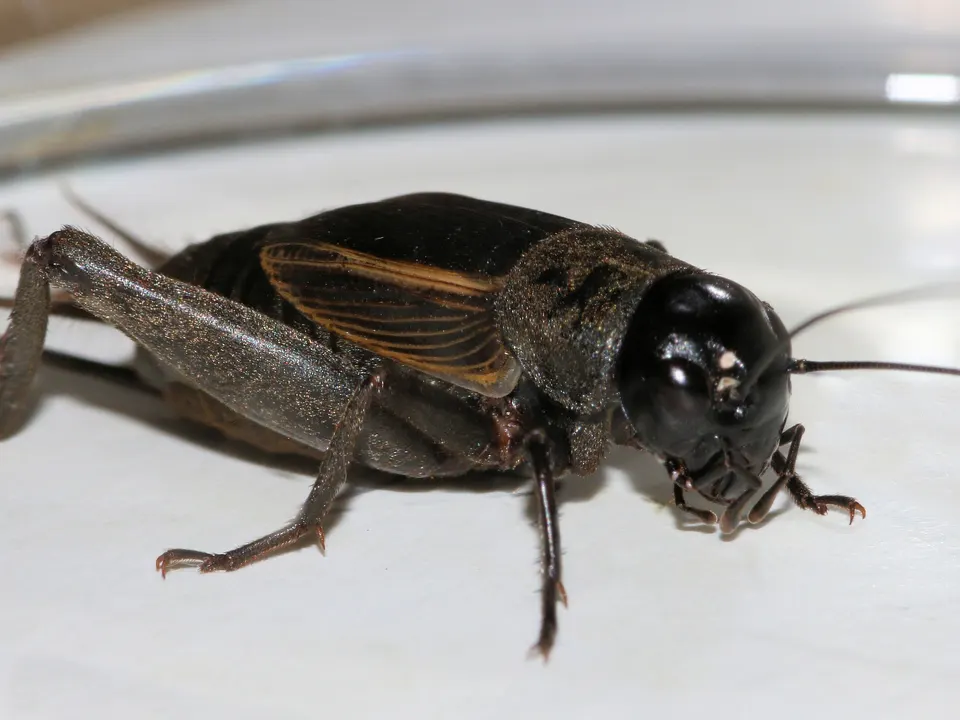
- Body and color. Field crickets are glossy, dark brown to nearly black, and up to about an inch long. House crickets are lighter and tan, with darker bands across the head.
- Antennae and legs. Both have threadlike antennae as long as the body or longer, and thick hind legs made for jumping. Two short tail-like appendages stick out at the rear. Females also carry a longer, needle-shaped egg-laying tube.
- The sound. Only males chirp. They make the sound by rubbing their wings together, usually after dark, from behind appliances, in wall voids or under stored items. A chirp that keeps moving around the house tends to come from a single insect. Many voices at once suggest a larger group.
- Where you find them. Look along baseboards, in basements and crawl spaces, beside water heaters, and inside boxes on garage floors. Porch and window lights draw them in from the yard at night.
- What they can harm. Crickets do not spread disease and do not weaken the structure of a home. Indoors they may chew cotton, wool, silk or paper, especially items that are soiled or damp. Most field crickets do not survive long inside, while house crickets can sometimes breed in warm areas.
Regional extension references describe field crickets as occasional invaders. They move indoors mainly in late summer and fall rather than living inside year-round (Pacific Northwest Insect Management Handbook; University of Idaho Extension).
Signs that point to calling a licensed professional
One cricket hopping across the kitchen in October is normal for the Treasure Valley and is not much of a concern. A licensed professional is worth contacting in these situations:
- Your garage, basement or crawl space holds dozens of crickets every fall.
- They keep turning up in bedrooms or living areas.
- Stored clothing or paper shows chewing damage.
- You hear chirping night after night and cannot find where it starts.
A pattern that repeats each season usually means there are entry points worth finding.
What licensed cricket work typically involves
- An inspection first. The technician checks that the insects really are crickets and looks at where they gather inside and outside the home.
- Locating the way in. This covers garage door seals, sliding door tracks, basement windows, crawl-space vents, foundation cracks and gaps around pipes and wiring. Older Nampa homes often need extra attention here.
- Exterior and harborage treatment. Licensed products are applied around the foundation and in the sheltered spots where crickets collect. In some cases bait is placed in suitable areas, using methods that are family and pet safe.
- Advice on what draws them. The technician may point out conditions such as bright fixtures near doors, thick ground cover against the siding, or firewood stacked beside the house.
- Seasonal timing. Treating in late summer, before canals shut off and fields come in, often works better than starting once crickets are already inside. Idaho requires anyone hired to apply pesticides to be licensed, which is one reason this work belongs with a professional.
Request a free quote for cricket problems in Nampa
Recommended local provider
This guide recommends ProGuard Pest Control as a licensed local provider for Nampa homes. ProGuard is local, family and veteran owned, and its treatments are family and pet safe.
Describe what you are seeing and request a free quote. Requests are passed to a licensed local provider.
Your request is shared with a licensed local provider, so they can reply. This guide does not sell your information.
- Local, family and veteran owned
- Licensed and insured
- Family and pet safe
- Free quote
- Serves Nampa, Idaho
Nampa cricket questions, answered
I live near Indian Creek or an irrigation lateral. Does that mean I’ll have crickets?
Not necessarily. Damp banks and grassy ditch edges support crickets in summer, so homes close to water may see more activity in fall. Plenty of houses near water have little trouble, though. How easily crickets can get inside matters at least as much as where they started.
Why did crickets show up right after the field behind us was harvested?
Cutting a crop removes the cover crickets were living in, and harvest often comes as nights are getting colder. Homes at the edge of town, such as those toward Happy Valley Road or Greenhurst Road, can see crickets arrive within a short time of each other.
Is the chirping in my basement a sign of something serious?
Usually not. It is typically one or a few males calling from a sheltered corner. If the chirping keeps up for weeks or you find many crickets, ask a professional to look for the entry route.
Can crickets make my family or pets sick?
Crickets are not known to spread disease to people or pets. Indoors, the main concerns are noise, the nuisance of finding them, and possible chewing on fabric or paper.
My downtown house is over a century old. Are older homes more prone to crickets?
Older foundations, basement windows and door frames often have more small gaps than newer construction, so crickets can find a way inside more easily. A careful inspection of those spots is usually the first step.
Sources
- Pacific Northwest Insect Management Handbook
- University of Idaho Extension
- City of Nampa, History of Nampa
- NWS Boise, Local Climate of the Treasure Valley
Each link points to the university, agency or city page that supports the information above. This page is general information and is not a substitute for licensed professional work.
More from this guide
Other household pests in Nampa
Need help with a pest in Nampa?
Describe what you are seeing and request a free quote. Requests are passed to a licensed local provider.