Pest guide · Nampa, Idaho
Boxelder Bugs in Nampa: Ditch-Bank Trees, Warm Walls and the Autumn Swarm
- Reviewed by a licensed Idaho pest professional
In Nampa, boxelder bugs are mostly an autumn event. After a hot, dry Treasure Valley summer, cooler nights send these black-and-red insects off their host trees. They crowd onto whatever surface holds the afternoon heat: stucco on a newer house off Midland Boulevard, painted siding in south Nampa, or old brick near the 1903 depot downtown. From there they look for openings where they can wait out the winter.
They are a nuisance, not a danger. Extension guidance treats them as an occasional invader that wanders indoors, not as a pest that builds up a colony inside your rooms. The most useful work is closing the openings they use. When the gathering is heavy, a licensed applicator may also treat the outside surfaces where the bugs collect.
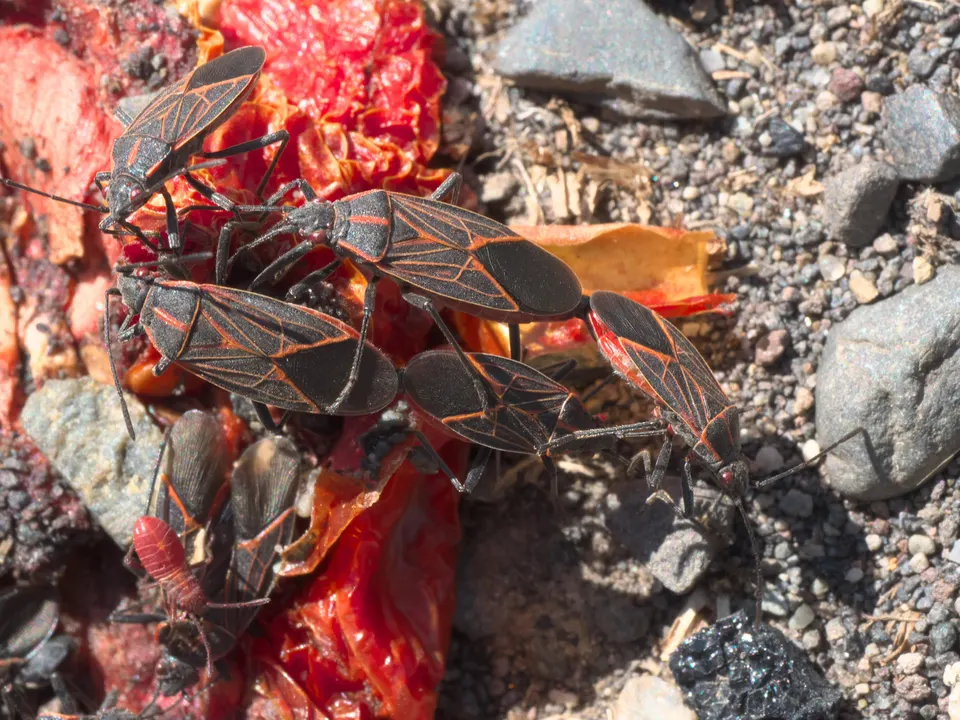
Creek banks, canal rows and old brick: where Nampa notices them first
Boxelder bugs feed mainly on the seeds of female boxelder trees, and to a lesser degree on some maples. Boxelder grows fast and often sprouts on its own near water. That means tree lines along Indian Creek and beside irrigation canals and laterals can support large numbers. So can trees on leftover farm ground at the edge of town.
According to the city’s published history, the land around Nampa was sagebrush until the Phyllis Canal and the Ridenbaugh Canal extension brought irrigation water in the early 1890s. That water is still part of why trees grow along ditches and in yards today.
Homes close to those tree rows tend to see the bugs first. That can be an older block downtown or a newer street toward Happy Valley Road or Karcher Road. A yard with no boxelder of its own can still get visitors, because the adults fly in from a neighbor’s tree or a nearby ditch bank. Older downtown buildings bring their own issues. Weathered mortar, aging wood window frames and sun-warmed brick give the insects plenty of warm faces and small gaps to work into.
Identifying boxelder bugs and knowing what they do
- Adults. About half an inch long, flat and narrow, dark gray to black. They have red or orange lines behind the head and along the wing margins.
- Young bugs (nymphs). Smaller, wingless and bright red. They are often mixed in with adults on tree trunks and walls late in the season.
- Where you see them. Massed on warm siding, fences, foundations and tree bark in late summer and fall. On mild winter afternoons, a few may turn up around windows or in upstairs rooms.
- Health and property. They do not chew wood or fabric, and they are not known to spread disease. A bug may very rarely probe skin. Their droppings can leave reddish-brown spots on curtains, walls and light fabrics, and crushed bugs give off an unpleasant smell.
University of Idaho Extension and the Pacific Northwest Insect Management Handbook both describe boxelder bugs as a household nuisance. The trouble is their sheer numbers and their habit of slipping into buildings, not harm to people or structures.
Signs it’s time to bring in a licensed professional
- The same walls are covered in bugs every fall, year after year.
- Bugs keep appearing in the attic, in upstairs rooms or along window sills during winter.
- Drapes, blinds or light-colored walls are getting spotted.
- The building has many openings that are hard to reach, such as second-story soffits, gable vents or older brick and wood trim.
Mid to late summer, before the bugs start gathering, is a good time to ask for a quote. A fall request still makes sense if they are already massing on the siding. Once they are tucked deep inside walls and attics, closing the house up becomes much harder.
What licensed boxelder bug work usually involves
The extension sources set realistic expectations. Spraying inside living spaces is not recommended and tends to do little. A professional treatment of exterior walls and the foundation area can cut down how many bugs get in, but it will not wipe them out. For that reason, licensed work usually combines several steps:
- An inspection of the building shell. The technician looks at gaps at window and door frames, utility openings, soffits, gable and attic vents, corner trim and damaged screens.
- Exclusion. This means caulking and sealing the gaps, repairing screens and covering vents with fine mesh. The handbook advises doing this in summer, before the insects show up on the walls.
- Exterior treatment when needed. A licensed applicator treats the sunny surfaces and the foundation area where bugs collect during the fall gathering.
In Idaho, anyone hired to apply pesticides must hold the proper state license. This page is general information and is not a substitute for licensed professional work.
Request a free quote for boxelder bugs in Nampa
Recommended local provider
This guide recommends ProGuard Pest Control, a local, family and veteran owned company, for boxelder bug work in Nampa. Treatments are family and pet safe.
Describe what you are seeing and request a free quote. Requests are passed to a licensed local provider.
Your request is shared with a licensed local provider, so they can reply. This guide does not sell your information.
- Local, family and veteran owned
- Licensed local provider
- Family and pet safe
- Free quote
- Serves Nampa, Idaho
Nampa boxelder bug questions
My yard backs onto an irrigation lateral. Is that why I have so many?
It can be. Boxelder trees often grow along ditches and creek banks, and the bugs live on those trees through summer. If there are boxelders on the ditch bank, the adults only have a short flight to your walls once the weather cools.
Do they come in from the farm fields at the edge of town?
Field crops are not their main food. Boxelder trees are. Tree rows on leftover farm ground can still host them, so homes near those rows in south and west Nampa may notice them more.
Why do they pile up on the brick buildings downtown?
Masonry soaks up afternoon heat, and older buildings often have worn mortar and aging window frames. That warmth and those small gaps are exactly what the bugs look for before winter.
Will they multiply inside my house over the winter?
Extension sources describe them as overwintering visitors, not insects that build up a population indoors. The ones you see in winter almost always got in during the fall.
What time of year should I ask for help?
Summer is the best time to have gaps sealed and vents screened, before the bugs gather. If they are already massing on the siding in fall, a licensed provider can still look at exterior treatment and the openings they are using.
Sources
- University of Idaho Extension
- Pacific Northwest Insect Management Handbook
- National Weather Service, Local Climate of the Treasure Valley
- City of Nampa, History of Nampa
Each link points to the university, agency or city record behind the facts on this page.
More Nampa pest guides
More household pests around Nampa
Need help with a pest in Nampa?
Describe what you are seeing and request a free quote. Requests are passed to a licensed local provider.