Pest guide · Nampa, Idaho
Millipedes and Pill Bugs in Nampa: Canal Water, Damp Beds and Garage Thresholds
- Reviewed by a licensed Idaho pest professional
In Nampa, a few curled millipedes on the garage floor or a cluster of gray pill bugs by the back slider usually point to one thing: the soil right next to the house is staying wet. That is easy to do here. Canal and lateral water moves through town all growing season, lawns are watered on a schedule, and beds along a foundation can stay soft even in a hot, dry July.
These animals live in that damp layer and wander indoors by accident. They rarely survive long in a dry room. A licensed professional can confirm what you are seeing and look at the conditions outside the walls, which is where the real answer is.
Where Nampa’s water keeps the ground soft
Nampa grew up around irrigation. The city’s published history credits the Phyllis Canal and the Ridenbaugh Canal extension, which brought water in 1890 and 1891, with turning sagebrush into farmland. Laterals from that era still cross neighborhoods today. Add Indian Creek, the pond and watered lawns at Lakeview Park, and the fields still farmed toward Happy Valley Road and Greenhurst Road, and there is plenty of moist soil and leaf litter for millipedes and pill bugs.
Newer houses along corridors such as Midland Boulevard often start with fresh beds, thick bark and sprinkler heads set close to the walls. Older blocks near downtown tend to have mature trees, deeper leaf litter and, in some cases, crawl spaces. The pattern ends up similar in both: while water is flowing in summer, and again when fall nights cool down and the ground is still damp, these animals move across patios and slip under doors.
Telling millipedes, pill bugs and sowbugs apart
- Millipedes are long, rounded and usually brown to nearly black, with two pairs of legs on most body segments. They move slowly and curl into a flat spiral when bothered. Their food is decaying plant material in damp soil and leaf litter.
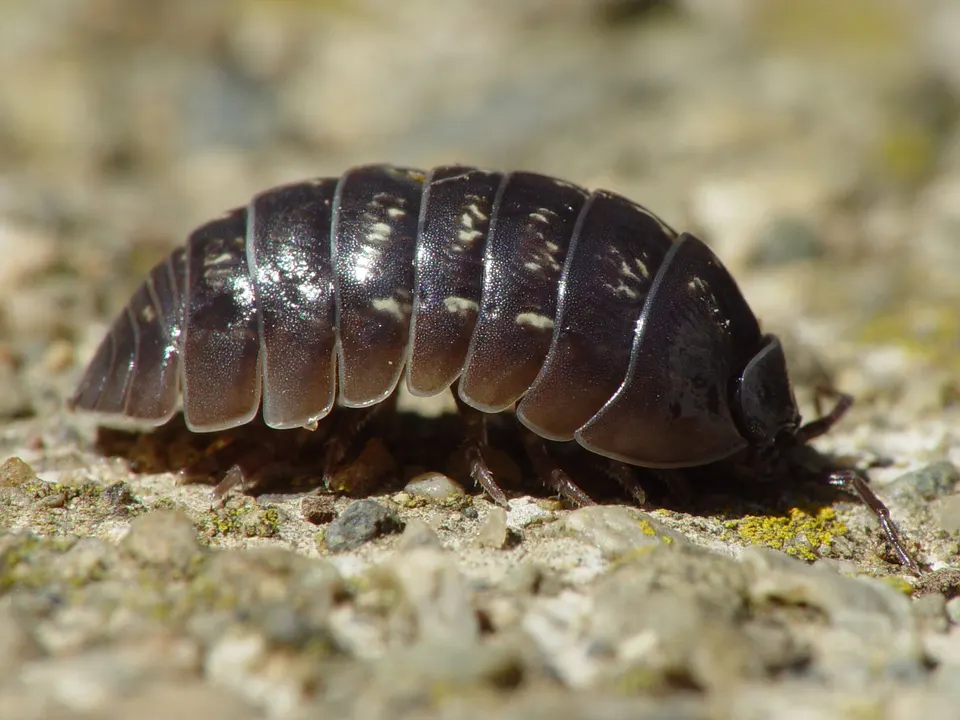
- Pill bugs are gray, oval and armored. They are land-dwelling crustaceans rather than insects, and they roll into a tight ball when touched.
- Sowbugs look much like pill bugs but are a little flatter, have two small tail-like points at the rear, and cannot roll up.
- Centipedes are a separate group. They are flattened, quick, carry one pair of legs per segment and hunt other small animals. They may turn up in the same damp spots.
None of these are known to spread disease to people, and they do not chew wood or harm a sound, dry structure. Some millipedes release a defensive fluid that can stain floors or irritate skin when crushed, and pill bugs and sowbugs sometimes nibble tender garden seedlings. For most Nampa homes, their real message is that moisture is collecting close to the walls.
Signs it’s time for a professional look
Seeing a few strays after the sprinklers run, or on a cool fall morning, is normal around Nampa homes. It is worth asking for a professional opinion when they show up inside week after week, when dozens gather along a garage door seal or a basement window, or when you keep finding them in bedrooms and bathrooms rather than just near an exterior door.
Beds against the foundation that never seem to dry out, window wells that hold water, or a musty crawl space are also good reasons to have someone look. Those conditions tend to keep the numbers steady until they are addressed.
What licensed work on these pests generally covers
- Confirming the animal. A technician sorts out millipedes, pill bugs, sowbugs and look-alikes such as centipedes, since each points to slightly different conditions.
- Tracing the dampness. The Pacific Northwest Insect Management Handbook puts the emphasis on correcting wet conditions and the debris these animals hide in, with any treatment following that work. Around a Nampa house that usually means checking sprinkler spray on the siding, bark or rock depth along the foundation, dense plantings, downspouts, window wells and crawl-space airflow.
- Checking the ways in. Worn door sweeps, garage door seals, gaps at thresholds and cracks near ground level are noted so they can be closed.
- Treating only where it is justified. In Idaho, anyone hired to apply pesticides must hold a license through the Idaho State Department of Agriculture. Treatment is targeted to the perimeter and entry points after the conditions are understood.
Request a free quote from a licensed local provider
Recommended local provider
This guide recommends ProGuard Pest Control, a local, family and veteran owned company that is licensed and insured. Its treatments are family and pet safe.
Describe what you are seeing and request a free quote. Requests are passed to a licensed local provider.
- Local, family and veteran owned
- Licensed and insured
- Family and pet safe
- Free quote
- Serves Nampa, Idaho
Nampa questions about millipedes, pill bugs and sowbugs
Why do I notice more of them in late summer and fall?
Through the summer, irrigation keeps beds and lawns damp while the Treasure Valley’s weather stays mostly dry, according to NWS Boise’s climate summary. When fall nights turn cool and the ground is still moist, some millipedes are known to wander in numbers, and garages and doorways are often where they end up.
Our yard backs onto a lateral. Is that the reason?
A nearby canal, lateral or Indian Creek can add moisture to the area, but the animals in your house usually come from conditions within a few feet of the walls. Bed depth, sprinkler spray and gaps under doors are things that can actually be changed.
Are they a risk to my kids or pets?
They are not known to bite people or spread disease. Crushed millipedes can leave a stain or mild skin irritation. If treatment is needed, ask a licensed provider about family and pet safe options.
Why are the ones inside usually dead?
Indoor air is too dry for them. Finding dried-out bodies is a sign they are wandering in from outside, not living and breeding in your rooms.
We just moved into a new house. Why so many?
New landscaping often means fresh bark, young plants watered heavily and soil that stays wet against a new foundation. Numbers often ease as watering settles, but a professional can point out what is holding moisture now.
Sources
- Pacific Northwest Insect Management Handbook
- University of Idaho Extension
- City of Nampa, History of Nampa
- NWS Boise, Local Climate of the Treasure Valley
Each link leads to the university, agency or city record behind the facts on this page.
More pest guides
Other pests Nampa households ask about
Need help with a pest in Nampa?
Describe what you are seeing and request a free quote. Requests are passed to a licensed local provider.