Pest guide · Nampa, Idaho
Flies in Nampa Homes: House Flies, Cluster Flies and Fruit Flies
- Reviewed by a licensed Idaho pest professional
Nampa sits where farm ground, rail lines and neighborhoods meet, so flies are a familiar summer and fall complaint here. Most of what homeowners see falls into three groups.
House flies hover around trash and patio food. Cluster flies crowd sunny windows when the weather turns cool. Tiny fruit flies drift over the fruit bowl or the sink.
Each one starts from a different place. Knowing which fly you have is the first step toward finding where it comes from.
How farm edges, irrigated yards and older buildings shape Nampa’s fly season
Agriculture still surrounds much of Canyon County. Toward Happy Valley Road and Greenhurst Road, homes sit close to working fields and livestock ground. Manure, spoiled feed and crop waste are classic house fly breeding material. Adult flies travel readily from those sites into nearby yards and garages during hot months.
Cluster flies follow a different pattern. Their young develop in soil, where they feed on earthworms. Irrigated lawns, parks and fields kept moist by the canal and lateral system through the growing season give them plenty of habitat. When fall nights cool off, the adults look for shelter. The older commercial blocks near 1st Street and Front Street, many rebuilt after the 1909 downtown fire, and the aging homes around them often have small gaps under eaves and around attic vents that let them slip inside. Newer houses along Midland Boulevard or near Karcher Road are not exempt, though, especially where they back onto open ground.
Fruit flies are an indoor matter. They follow ripening produce, recycling bins and damp drains, whether the home is a century old or built last year.
Telling the three apart
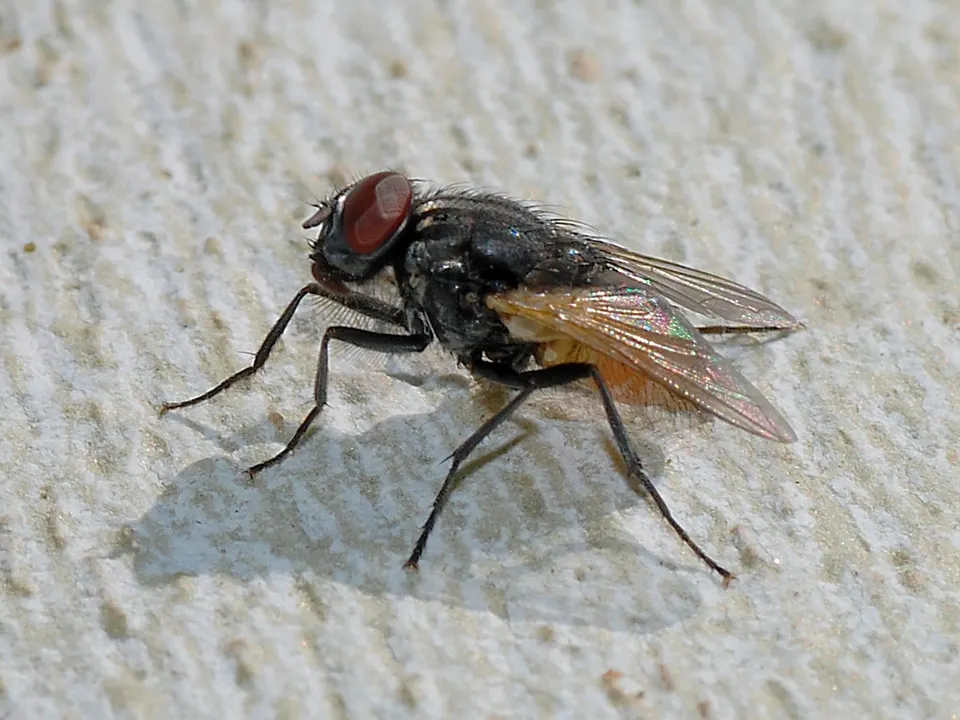
- House flies are medium-sized and gray, with four dark stripes on the back of the thorax. They land on food, counters and garbage. Their larvae grow in manure, garbage and other decaying material.
- Cluster flies are a bit larger and slower. They have golden hairs on the thorax and wings that overlap when resting. You usually find them gathered in groups on south- or west-facing windows, in attics, or buzzing weakly indoors on mild winter days. Indoors they are sheltering, not breeding.
- Fruit flies are tiny, roughly an eighth of an inch long, and tan with red eyes. They breed in fermenting fruit, vegetables, spilled juice, and the film that builds up inside drains and bins.
University extension guidance in the Pacific Northwest Insect Management Handbook handles each of these flies separately. A fly that breeds in waste and a fly that only winters in walls call for different responses.
Health concerns, mostly with house flies
The CDC notes that flies which feed and breed in garbage and waste can pick up disease-causing germs. They can then carry those germs to food and kitchen surfaces. That concern applies mainly to house flies.
Cluster flies are considered a nuisance. They do not breed in food or trash. Fruit flies are also mostly a nuisance, though a lasting problem usually means fermenting food or residue is sitting somewhere unnoticed.
This guide offers general information only and is not medical advice. Questions about illness belong with a doctor or Southwest District Health, which serves Canyon County.
Signs it is time to call a licensed professional
A few stray flies in August are normal in a farm-and-rail town. A free quote makes sense in these situations:
- House flies stay numerous indoors week after week.
- Cluster flies gather in the attic or upstairs rooms every fall.
- Fruit flies keep coming back after the obvious produce is gone.
Repeat activity usually means a breeding site or an entry gap that has not been found yet.
What licensed fly work typically involves
- Confirming the species first, since the source and the right approach depend on which fly is present.
- Tracing the origin. That may be waste or debris outside, a hidden indoor breeding spot such as a drain or bin, or, for cluster flies, the eave, vent and siding gaps they use to get in.
- Applying targeted treatment or exclusion suited to that fly. This can include attic and exterior work on older homes, along with return visits when a source takes more than one trip to resolve.
This page is not a substitute for licensed professional work. In Idaho, people hired to apply pest control products must be licensed by the state.
Request a free quote for fly problems in Nampa
Recommended local provider
This guide recommends ProGuard Pest Control, a local, family and veteran owned company that is licensed and insured. Treatments are family and pet safe. Describe what you are seeing and request a free quote. Requests are passed to a licensed local provider.
- Local, family and veteran owned
- Licensed and insured
- Family and pet safe
- Free quote
- Serves Nampa, Idaho
Nampa fly questions
We live near farm ground on the south side of town. Is that why summer brings so many house flies?
It can be part of the reason. House flies breed in manure, spoiled feed and other decaying material, and adults can travel some distance from where they hatch. Homes near livestock or crop operations often see more of them in hot weather. A professional can check whether flies are also breeding closer to the house.
Does the irrigation lateral behind my yard breed flies?
Running canal water is not where house flies or fruit flies develop. They need decaying material or fermenting food. The moist soil irrigation keeps in place can support the earthworms that cluster fly young feed on, though. That is one reason irrigated neighborhoods see cluster flies in fall.
Why are slow, buzzing flies showing up in my older downtown home on a warm February afternoon?
Those are likely cluster flies that moved into the walls or attic last fall. A sunny day warms them enough to wander toward the light. They did not hatch indoors, and the real fix involves the gaps they used to get in.
The fruit is gone, but tiny flies still circle my kitchen sink. What is going on?
Fruit flies can keep breeding in drain buildup, a recycling bin, or a spill under an appliance. The flies you see in the air are only the adults. If they keep returning, a professional can help locate the hidden source.
Can a door-to-door seller handle my fly problem?
Anyone selling pest services at the door in Nampa needs a city peddler or solicitor license and must wear the city-issued Peddler Permit Badge. They also have to stop when you say no. Asking to see the permit card is always reasonable.
Sources
- Pacific Northwest Insect Management Handbook
- CDC, about flies
- City of Nampa, History of Nampa
- City of Nampa, Approved Door-to-Door Solicitors
Each link points to the public agency, university or city record that supports the information on this page.
More pest guides
More household pests found around Nampa
Need help with a pest in Nampa?
Describe what you are seeing and request a free quote. Requests are passed to a licensed local provider.